
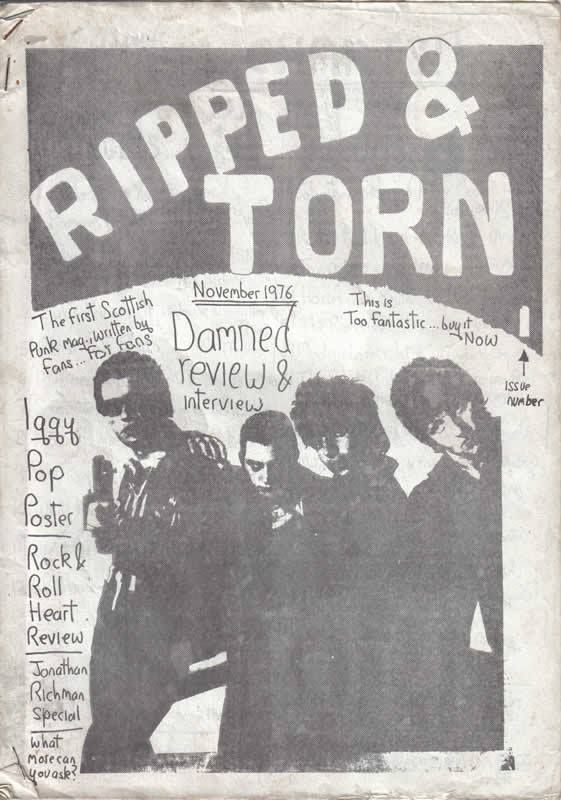
Entering the punk self publishing phenomenon in the same year was the Glaswegian fanzine, Ripped and Torn. Created by Tony D, Skid DeSade and Grant McNally, it featured many bands from the primal punk era of the 1970's such as The Damned, Sex Pistols and Iggy Pop. (Zine Wiki, 2010) Inspired by Mark Perry's Sniffin' Glue, it featured many of the same aesthetic, relying on photocopiers to create numerous copies of the zine for distribution. Connecting with local record stores, music papers, book shops and even Mark Perry himself, hundreds of copies were requested and sold in a matter of weeks, followed quickly by local press wanted to document this young punk's triumphs. Ripped and Torn also had a fairly short shelf life, with Tony D revoking all involvement in 1979. (Tony D, 2012)
The last punk zine I wish to document is the brain child of Aaron Elliot, better known as Aaron Cometbus, of which his most famous zine bears the same name. Cometbus started in the early 80's and submerged itself into the punk zine culture, although also featured many short stories, on a variety of different subjects. (Zine_Fiend, 2011) This aspect of Cometbus does establish itself as a per-zine, with influence from the subculture of punk. Cometbus followed the DIY and punk aesthetic of many zines of the time, however unique to the culture with the whole catalog of zines handwritten in their entirety.

As you can see with the above image, low quality images, photocopied layouts and handwritten text were all part of the creative familiarity that was established within the punk zine culture of the time and still remains today.
These three zines are directly influential to many punk zines of today and established a strong aesthetic within the DIY culture and community. The use of photocopiers, scissors and glue lead the way for a strong and healthy zine community, creating a flourishing do it yourself ethos to a generation of punks with voices to be heard. The timing of this self-publishing revolution was born within the technological race in the publishing industry, including the birth of the Xerox machine and commercially available printing methods.
Mark Perry, (1976), Sniffin Glue Cover (ONLINE). Available at: https://blogger.googleusercontent.com/img/b/R29vZ2xl/AVvXsEhzi5RlH1_KdrCpQD7pCXpvqTr7NzUudK0tXRBHp60PJdZXfl0GfgxFrBTMsQYANgfJ8H7MO9cj0bFHW67sOaqbeOQ6EIP-KNCCFP9cYI2TopDsIHBmmjrcHOyk6-Jnkt8J5YeFRh-pku4/s1600/sniff+1.jpg Accessed 04 April 13.
Tony D. (2012). Ripped and Torn. Available: http://killyourpetpuppy.co.uk/news/the-modern-lovers-home-of-the-hits-records-1976/. Last accessed 4th April 2013.
Tony D. (1976), Ripped and Torn Cover (ONLINE) Available at: http://i192.photobucket.com/albums/z149/pengy1966/KYPPRT1.jpg Accessed 4th April 2013.
Aaron Cometbus, (1983), Cometbus #11. Available at: https://fbcdn-sphotos-h-a.akamaihd.net/hphotos-ak-snc7/418181_386050461413059_711753525_n.jpg Accessed 4th April 2013.

No comments:
Post a Comment